Cablecranes

Agudio Cablecrane , performance and innovation

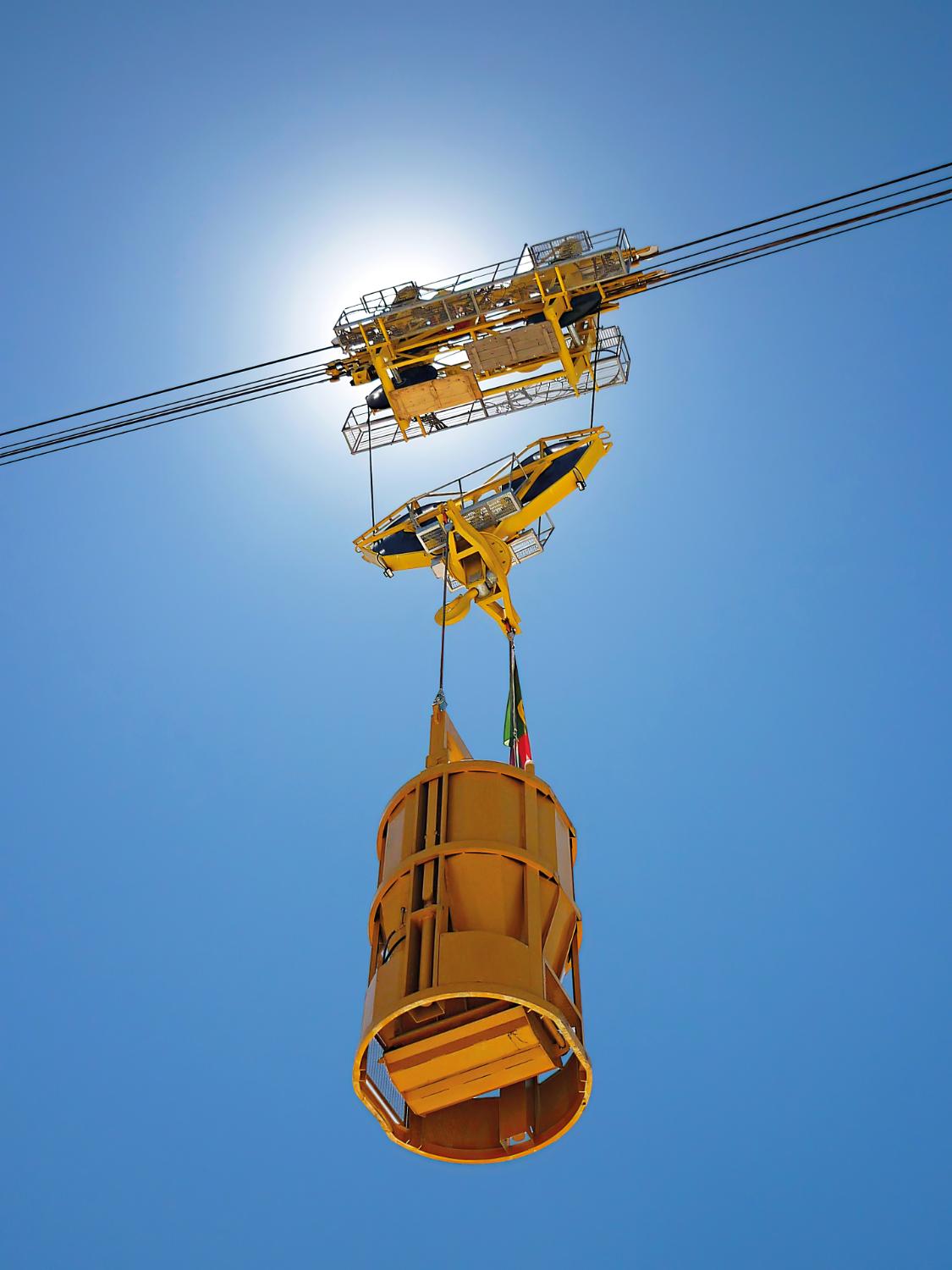
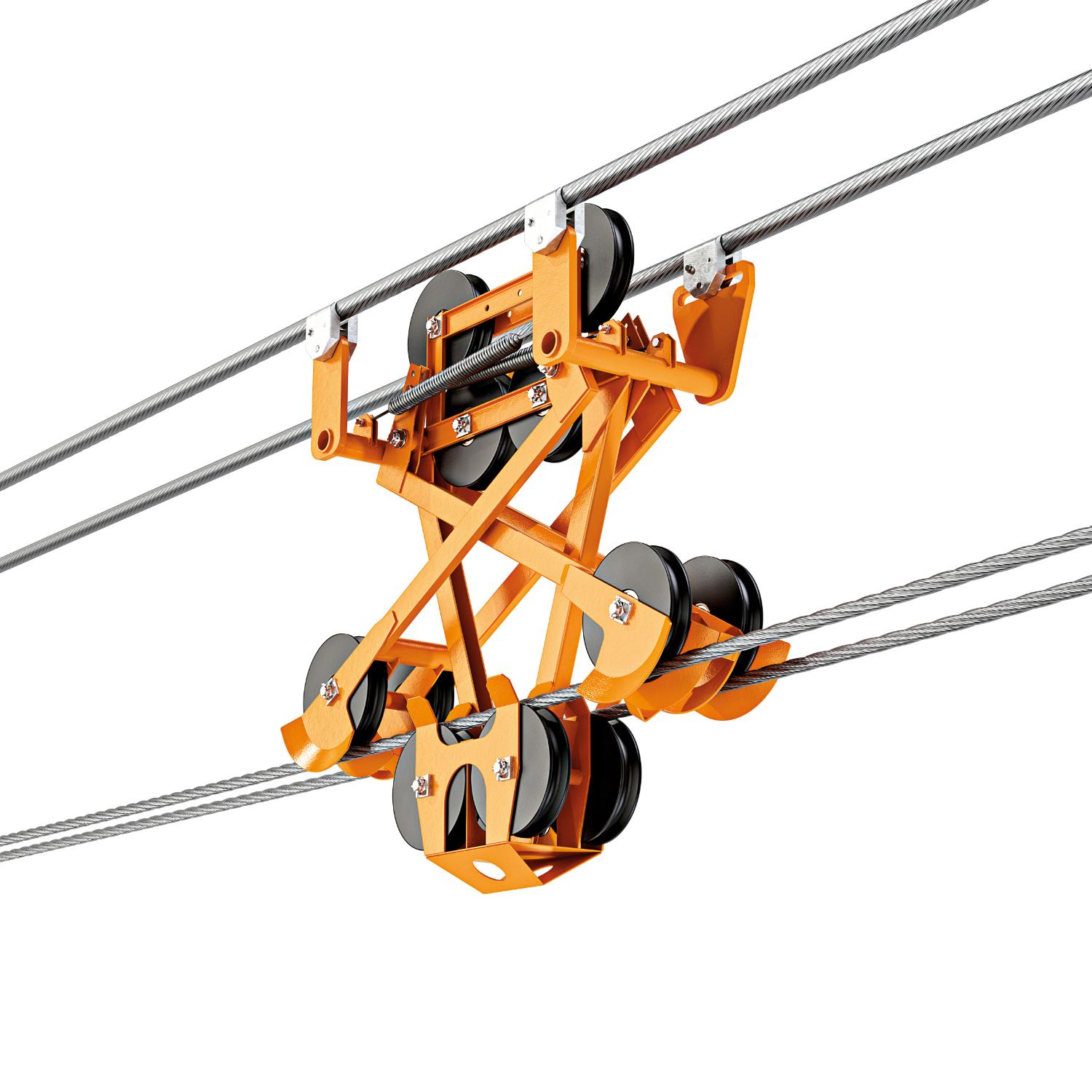
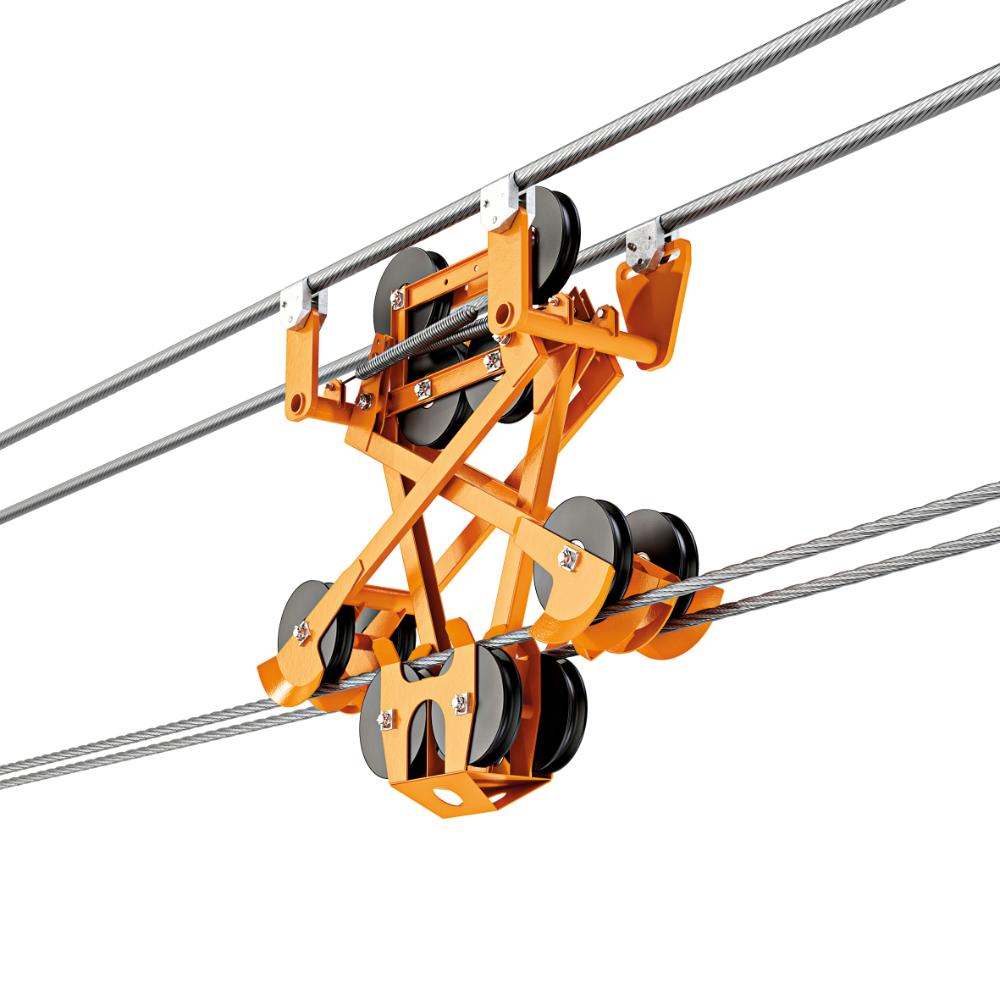
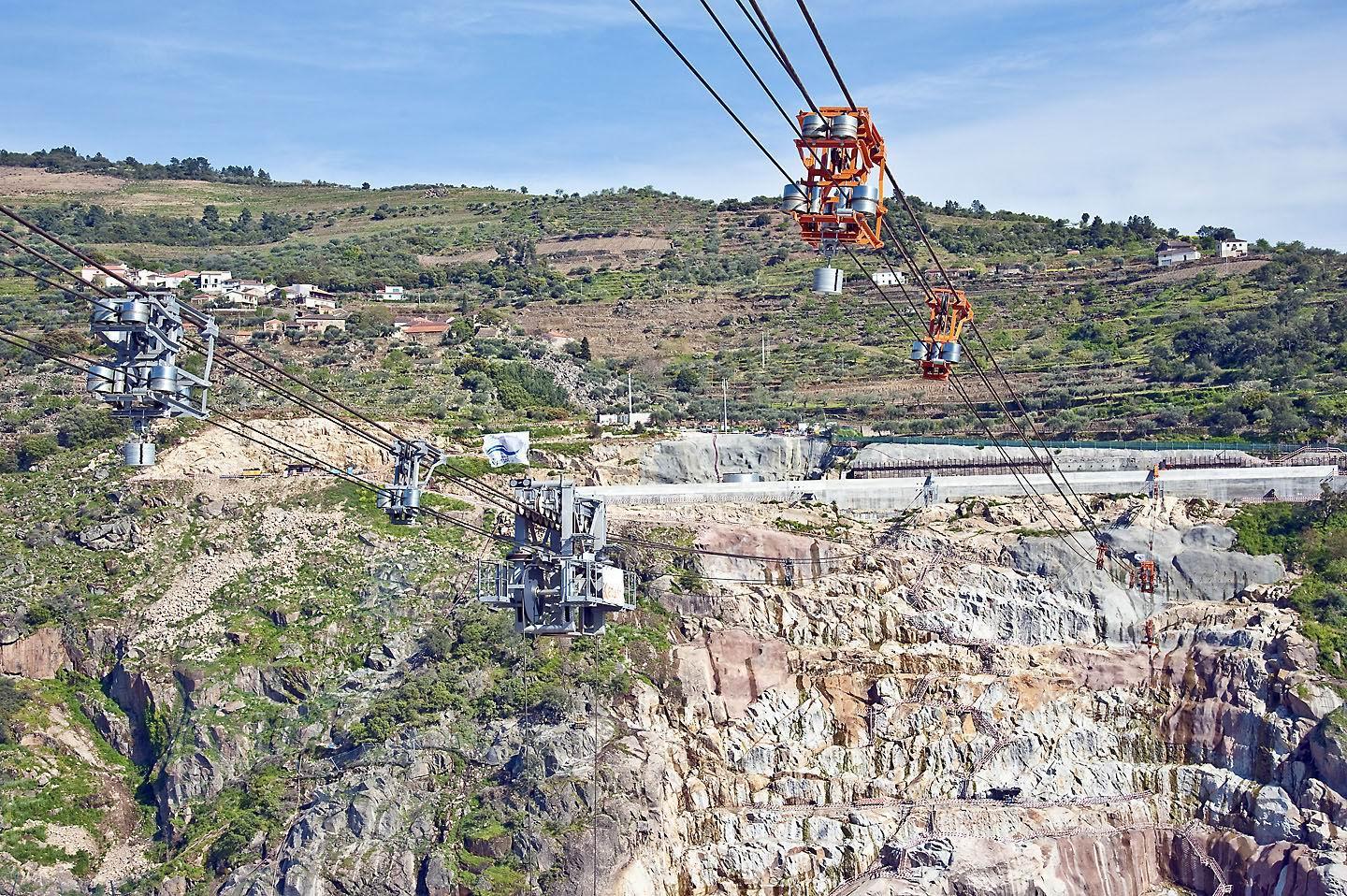
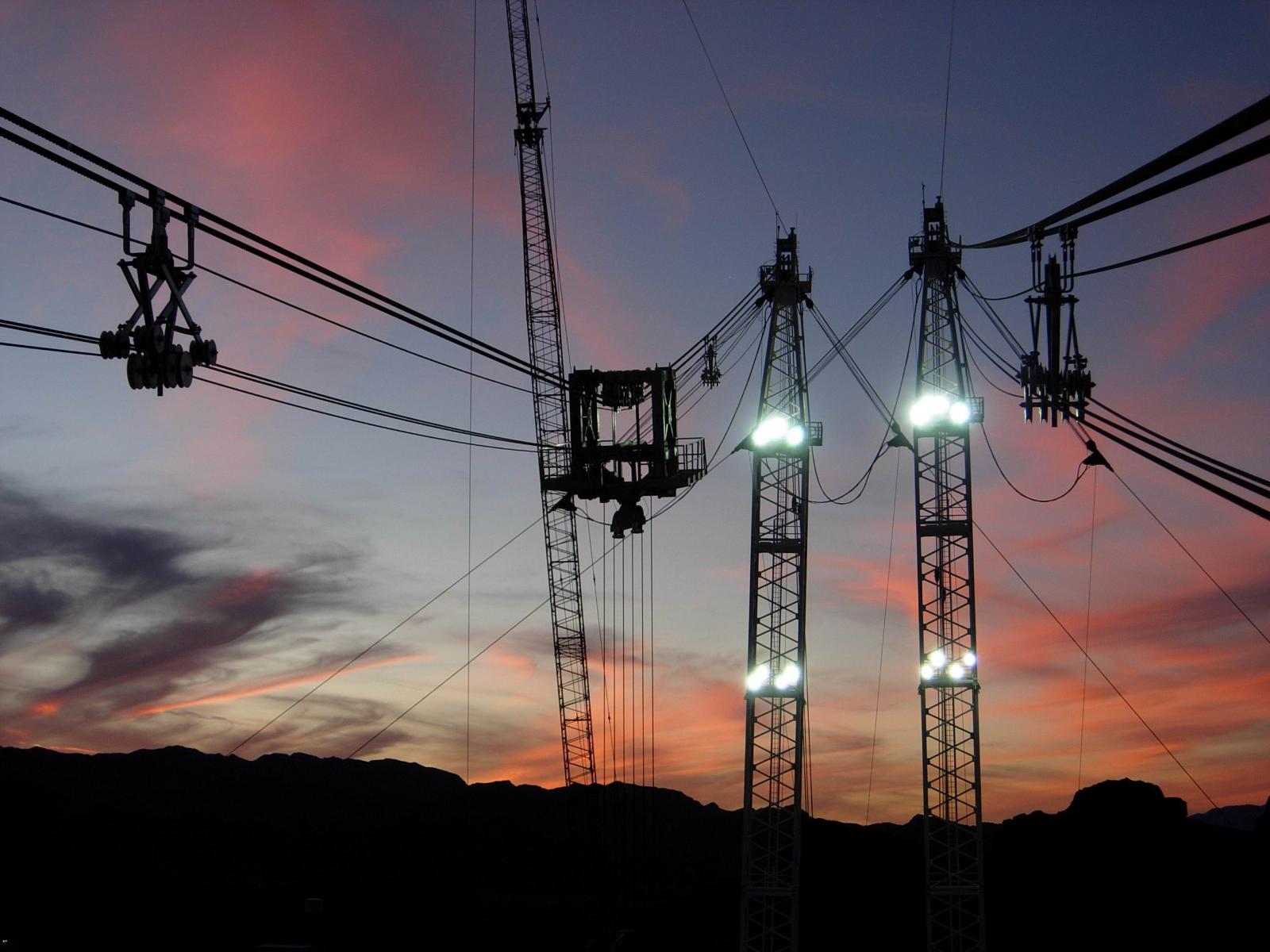
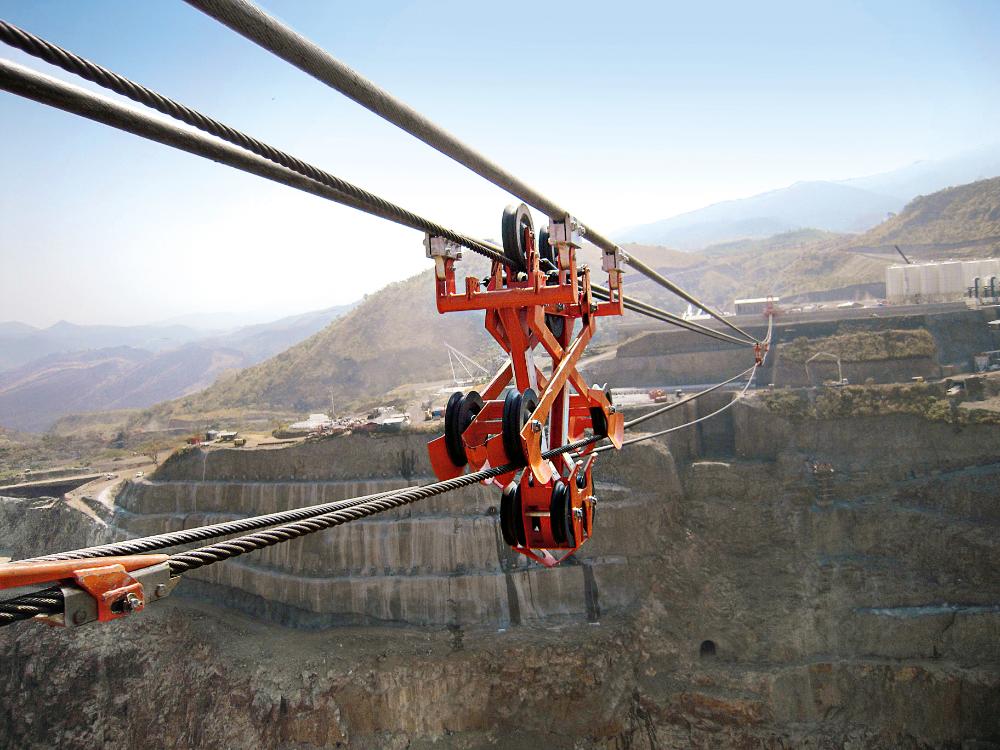
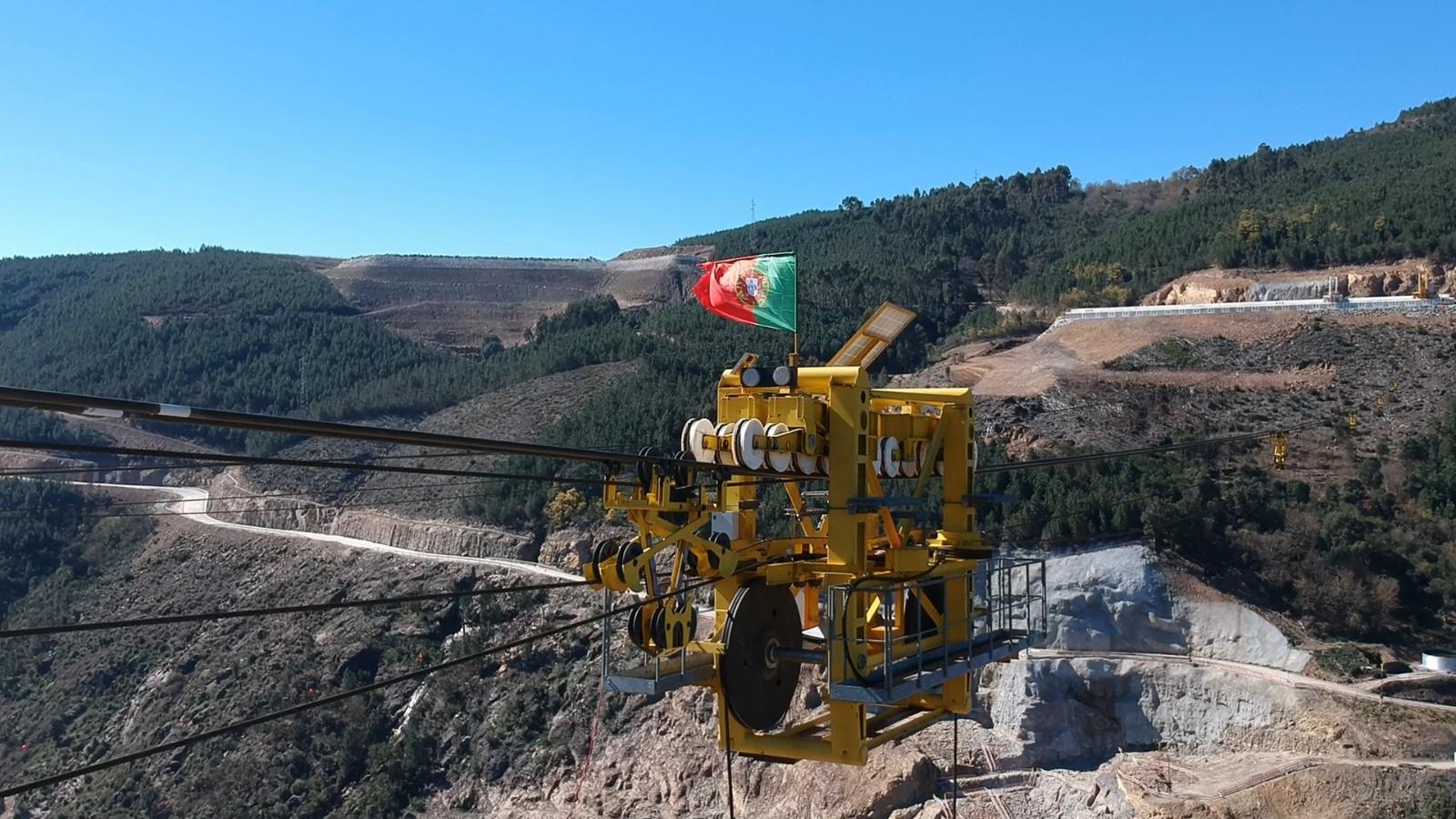
Agudio cablecranes are designed with twin track ropes, which are easier and quicker to install and more stable during operation. Special slack carriers, a patented Agudio solution, attached to the track ropes support the hauling anf hoisting ropes along the line, allowing the carrier to reach significant operating speeds safely, with minimal wear on the rollers and cables, minimizing system downtime for maintenance.

Agudio cable cranes, with a payload up to 70 tons, travel speed up to 8 m/s and lifting speed up to 4 m/s, represent the state-of-the-art of the technology. Those equipment can significantly simplify the operations of complex construction sites, with significant savings in terms of costs and construction time.

Characteristics of the Agudio Cablecrane

Payload
up to
70
Ton
Hook lowering
up to
400
m
Translation speed
up to
8
m/s
Hoisting speed
up to
4
m/s
Span
up to
2000
m
Speed

Speed

Agudio cablecranes are the only ones on the market that can reach such high working speeds (8 m/s in translation and 4 m/s in lifting), thanks to patented slack carriers that always keep the ropes in the correct position.
Tandem transport

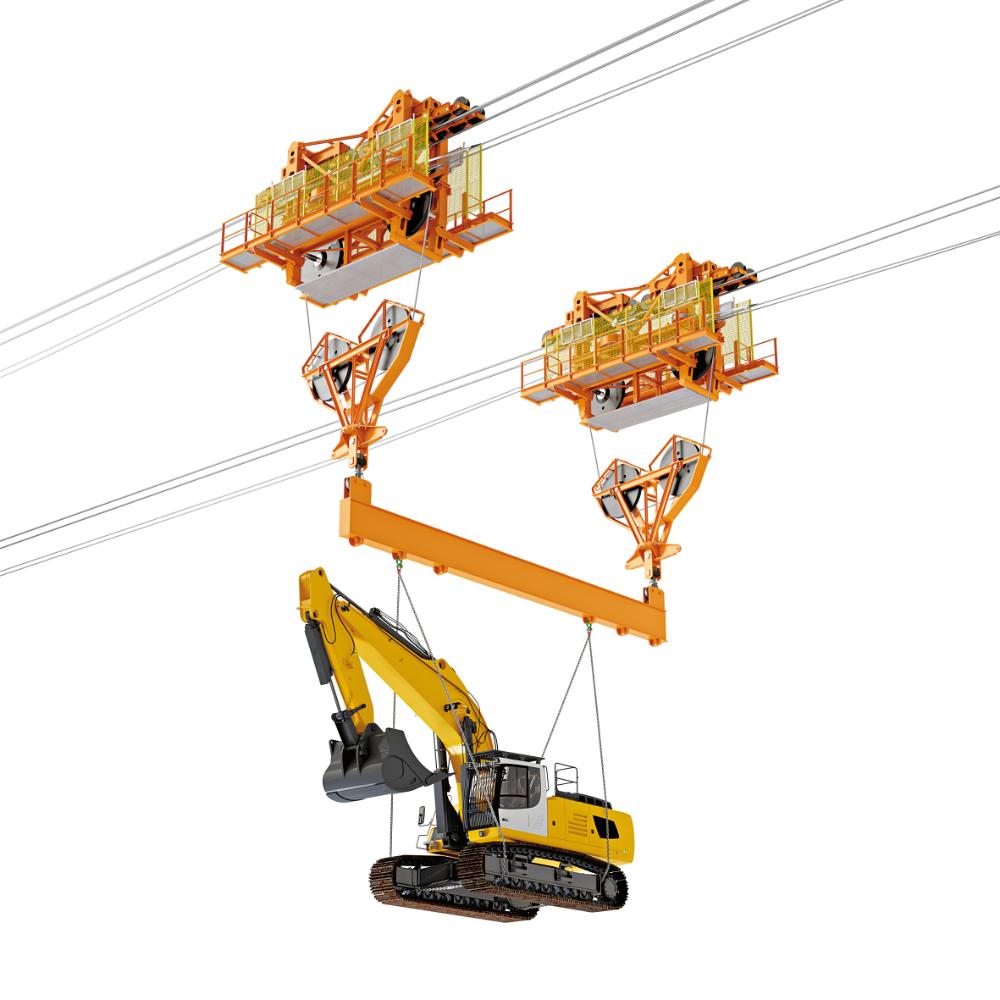
Tandem transport

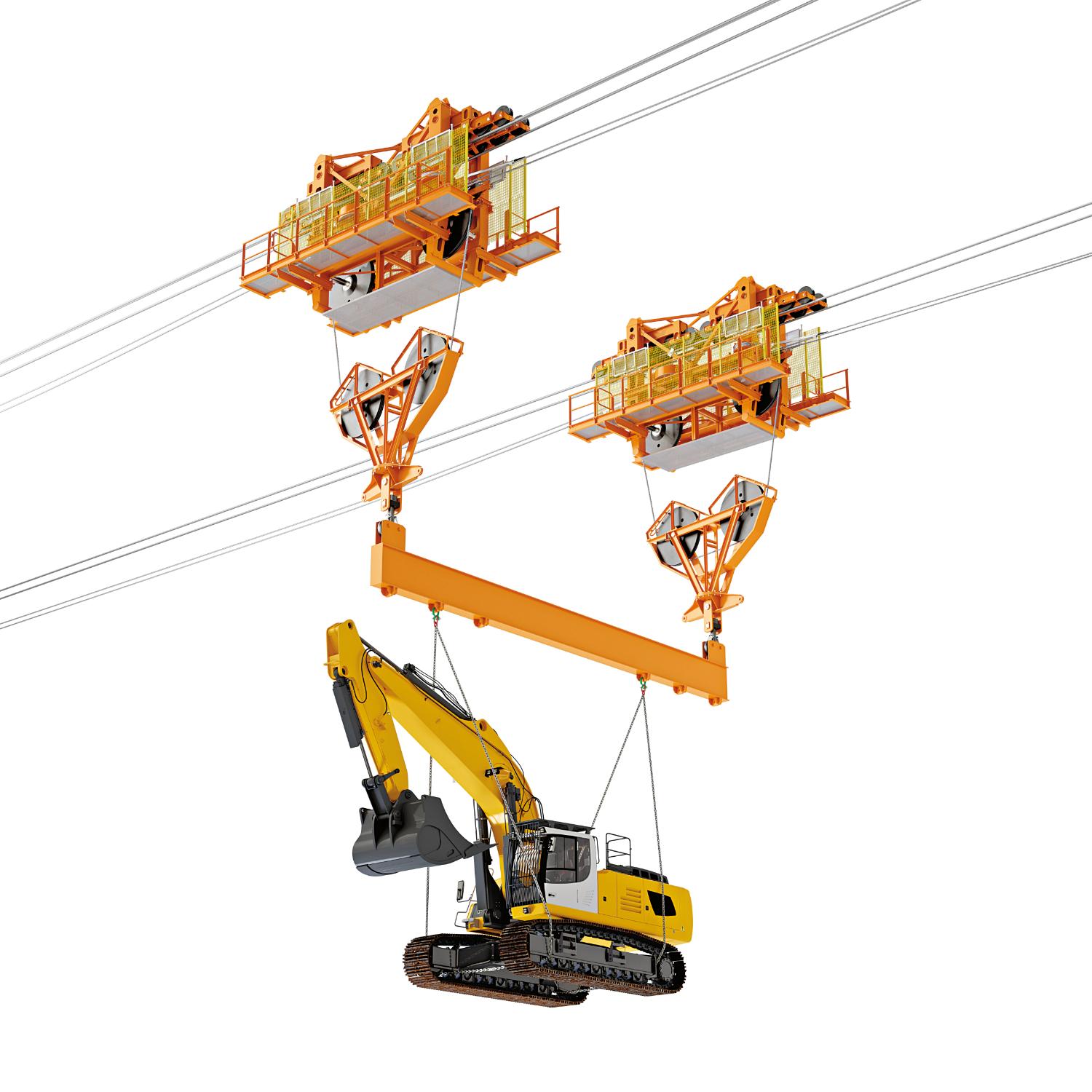
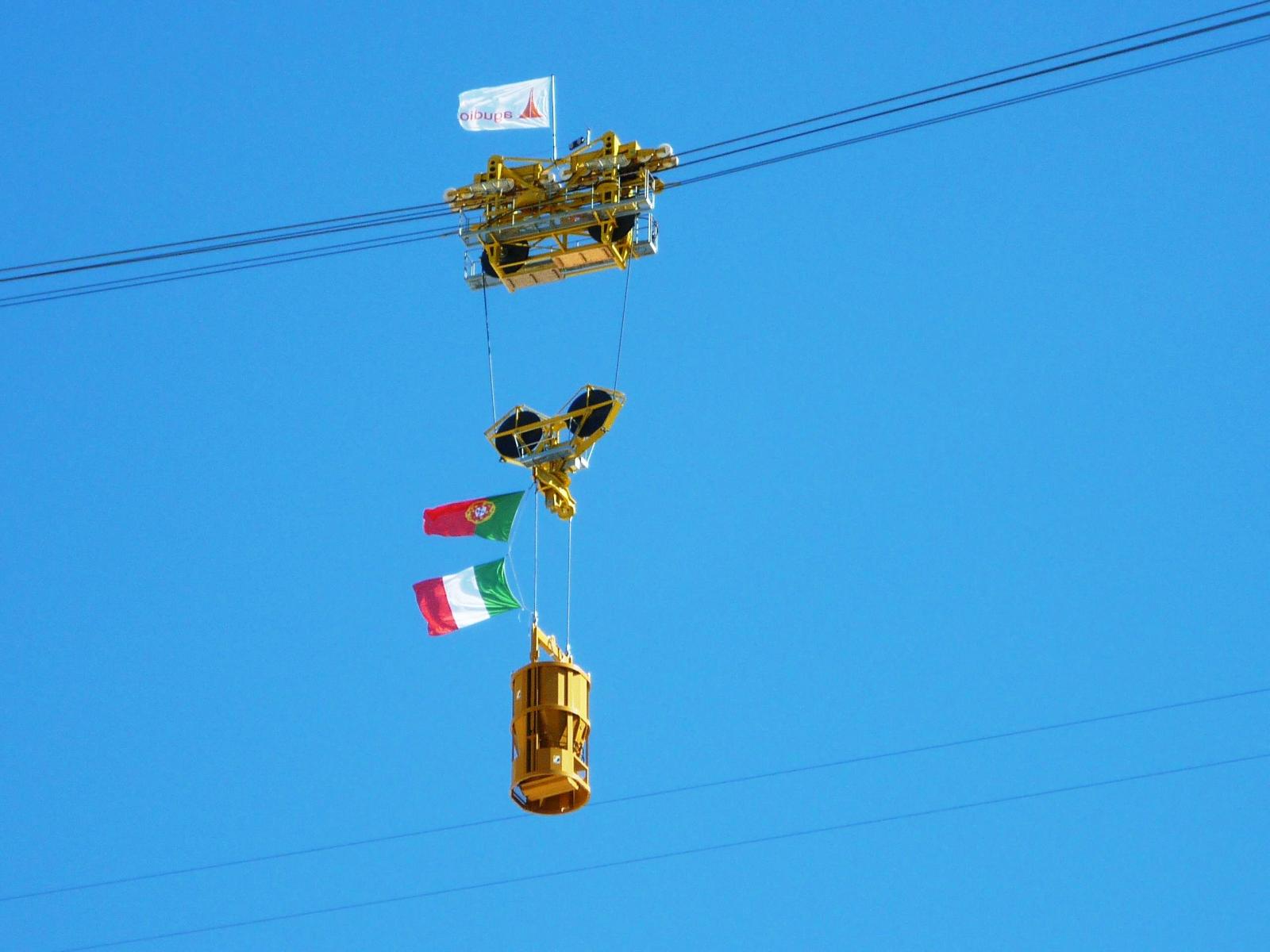
Two Agudio cablecranes can work in tandem to achieve a payload of 70 tons. A specific control system ensures the automatic operation preventing errors and reducing transport times.
Energy recovery

Energy recovery

Agudio cablecranes are equipped with asynchronous AC motors controlled by LEITDRIVE inverters complete with AFE (Active Front End) filters. Thanks to this architecture, during the phases in which the cablecrane generates energy, it is possible to feed the construction site's electrical network.
Stability and performance

Stability and performance

The Agudio twin track rope design gives high stability to the cablecrane even in strong wind conditions. This stability, combined with the control of the ropes done with patented slack carriers, guarantees unrivalled performance.
Parallel Cablecranes

In parallel cable cranes, the track ropes are attached at both ends to mobile carriages on rails, thus allowing work to be carried out on a rectangular area. The lifting and travel winches are mounted at one end inside the mobile carriage.

Radial Cablecranes

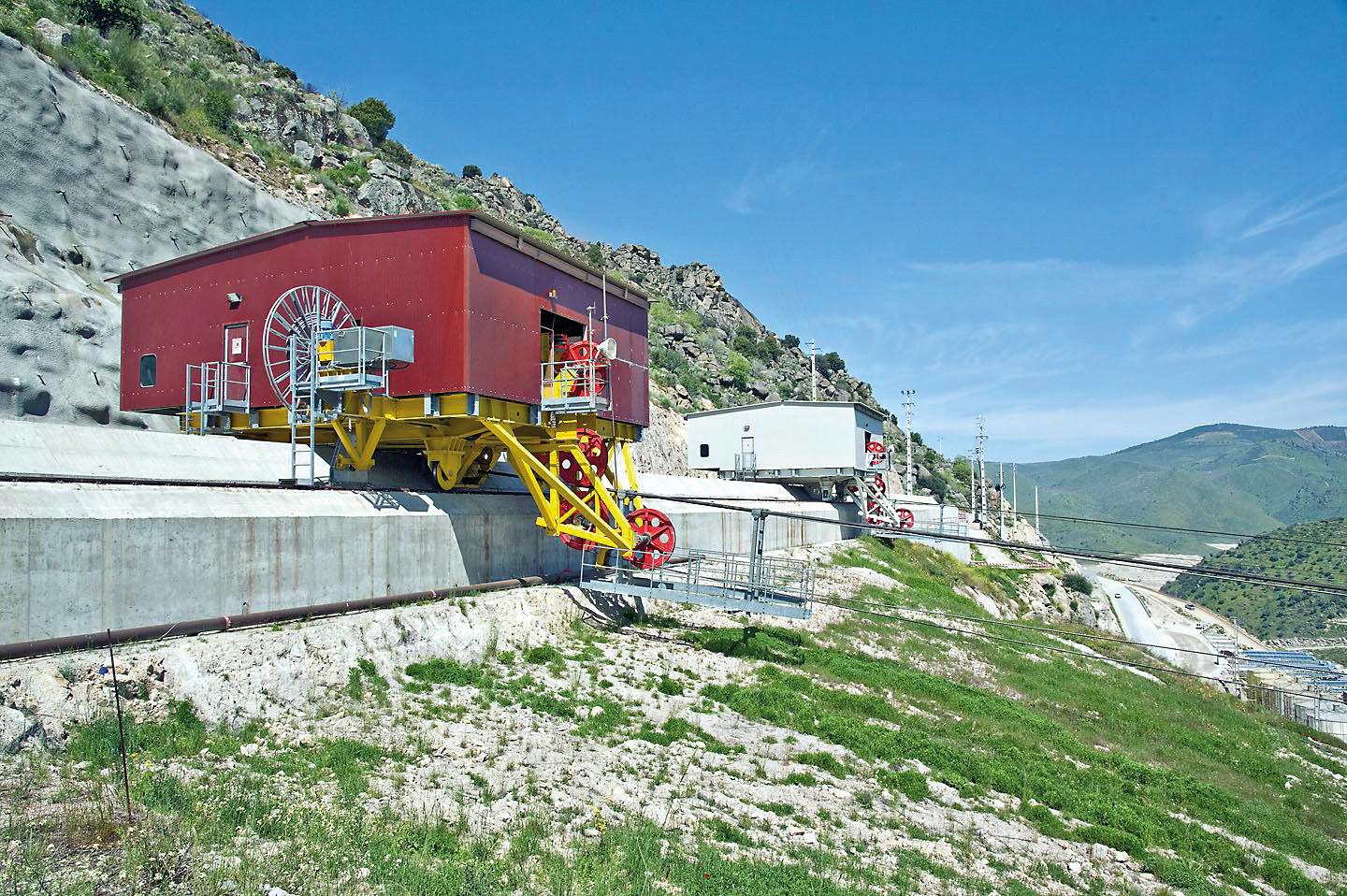
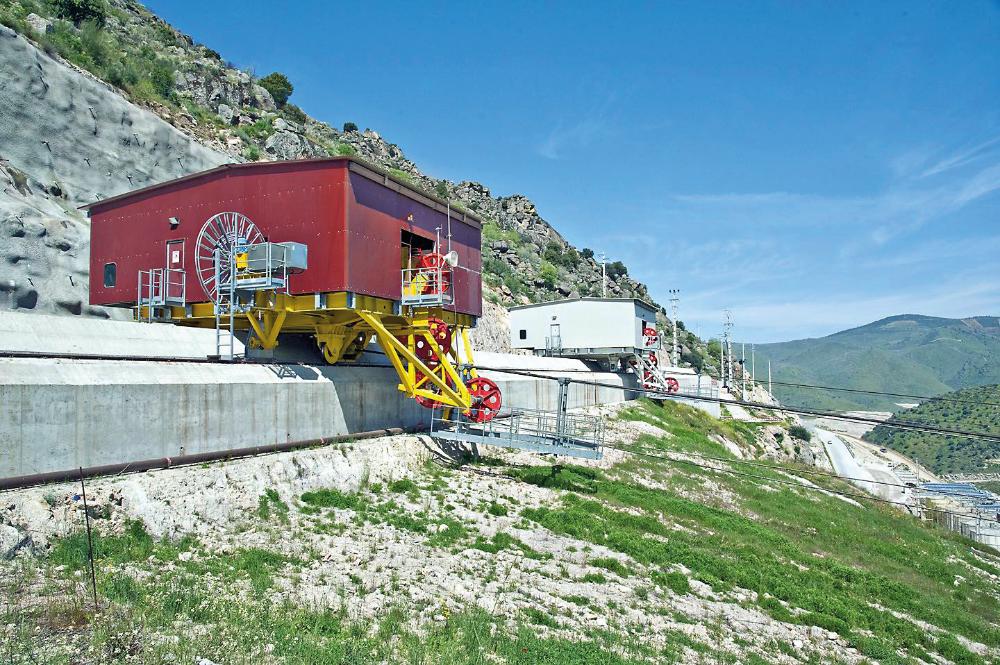
In radial cable cranes, the track ropes are attached at one end to a fixed concrete structure (or at the top of a fixed lattice tower) and at the other end to a mobile carriage on rails, in order to cover a circular sector of the construction site. In this solution, the winches are positioned on the ground near the fixed point.

Fixed and oscillating cablecranes

In this type of cable crane, the track ropes have both ends connected to two lattice towers fixed or with the possibility of being tilted simultaneously to one side or the other of the longitudinal axis, thus covering a linear or rectangular working area.

Featured project

Alto Tamega cablecranes, Portugal

Alto Tamega cablecranes, Portugal

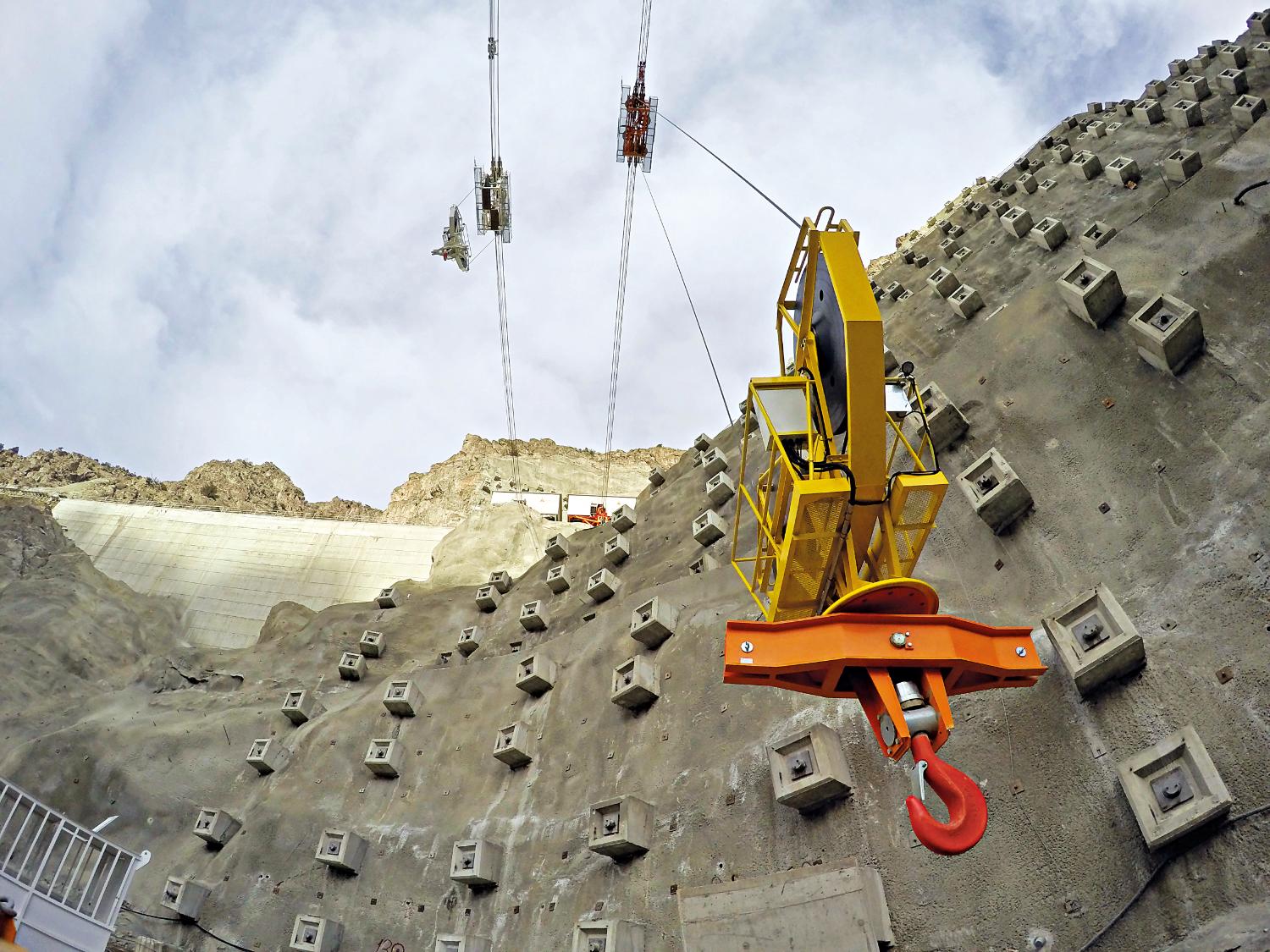
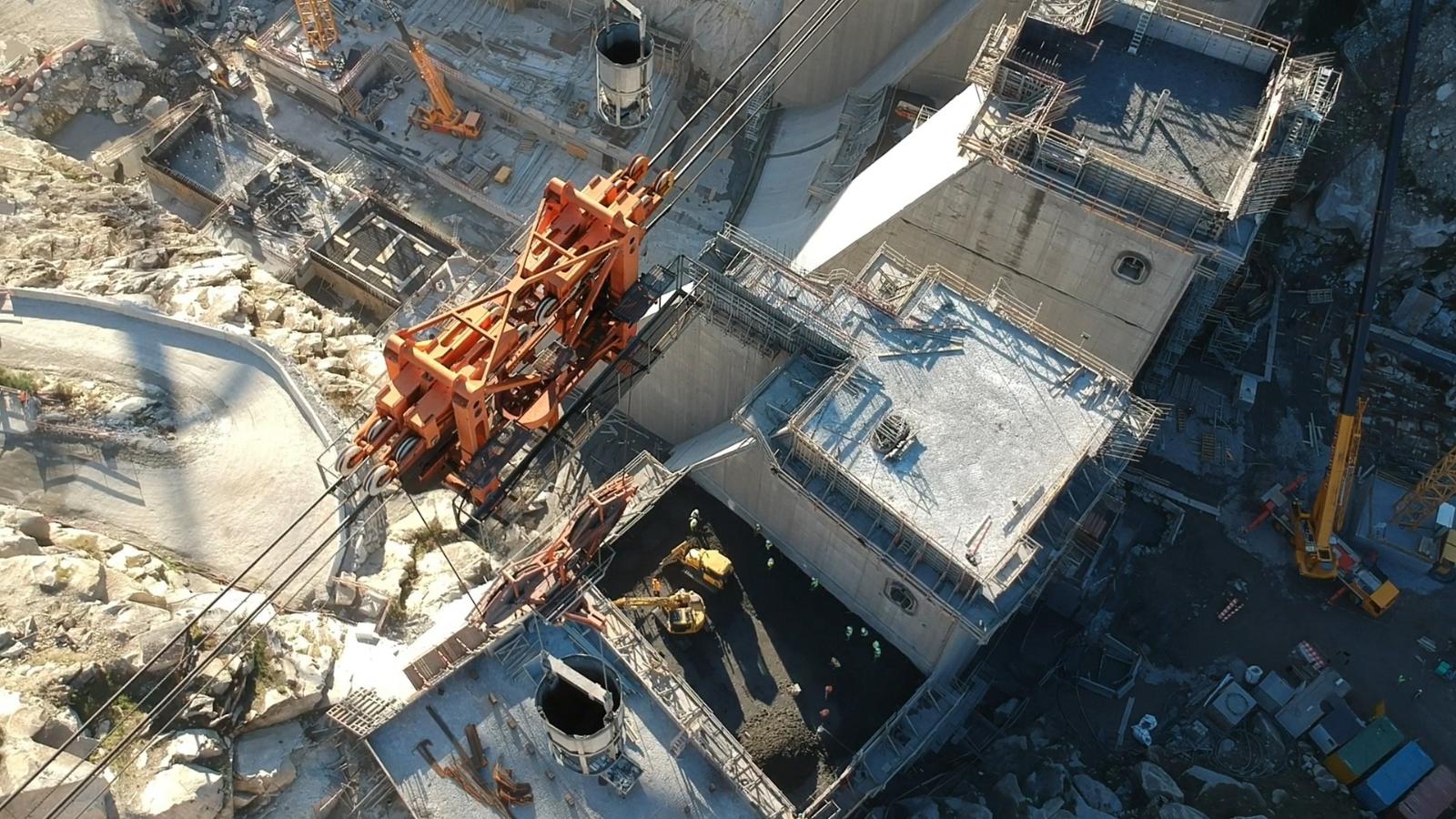
Two parallel cablecranes for the construction of a 335 meter high concrete arch dam. The cablecranes were used for concrete pouring thanks to their combination of high perfomance and reliability.

Go to the project

Other projects

Koysha cablecrane, Ethiopia

Koysha cablecrane, Ethiopia

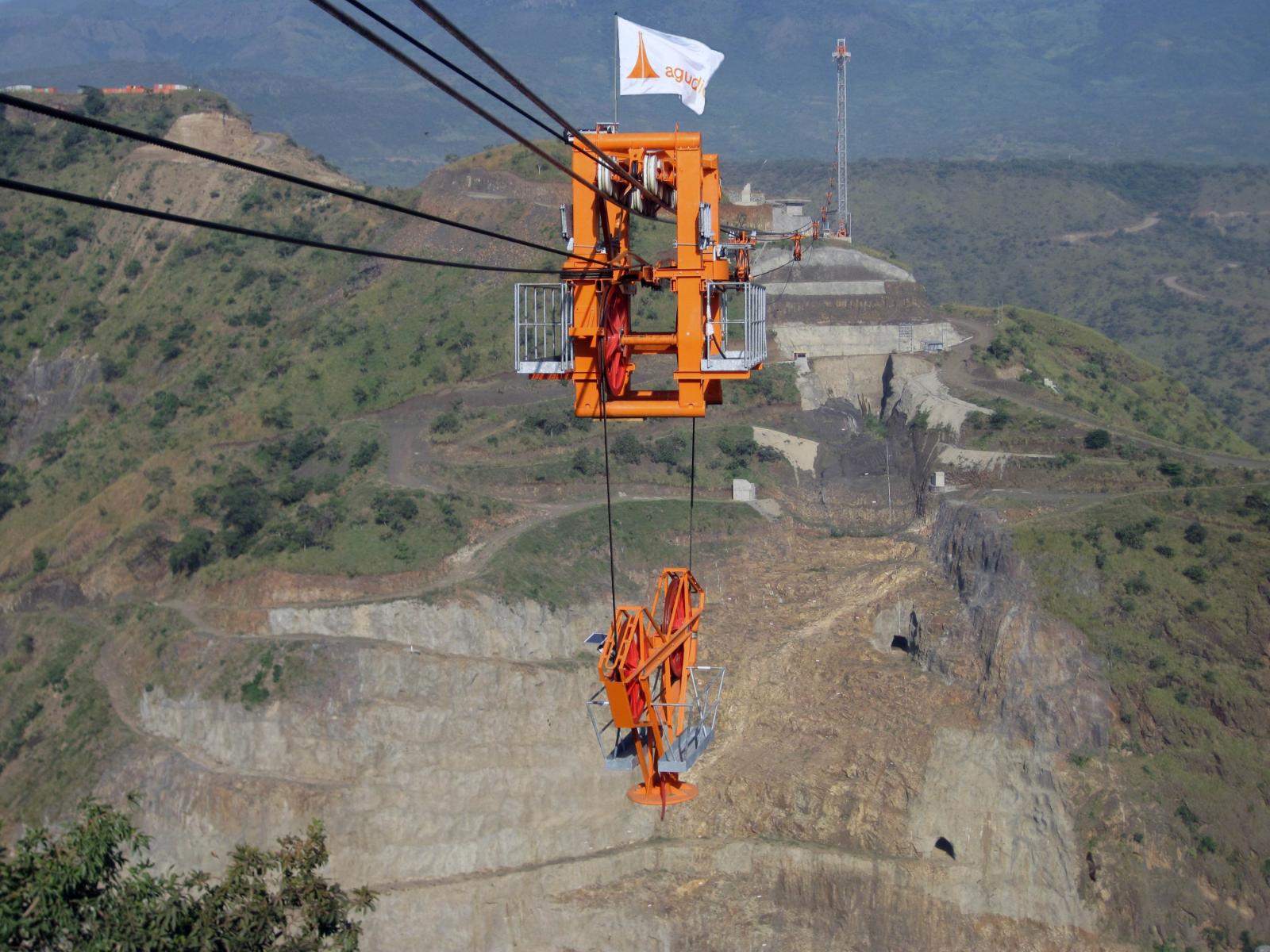
Revamping of the radial cable crane previously used for the construction of Gibe III dam, increasing the capacity to 35 tons, the travel speed to 6 m/s, and the lifting speed to 2.5 m/s. Other features of this cable crane include a fixed point with a 45 m tower and a 235 m radial runway.

Discover more
Daivoes cablecranes, Portugal

Daivoes cablecranes, Portugal

Overhaul, installation and commissioning of two radial cablecranes to be used in the construction of the 77 metres high and 264 metres long Daivoes dam, one of the four dams planned as part of the Tamega hydroelectric project in northern Portugal.

Discover more
Yusufeli cablecranes, Türkiye

Yusufeli cablecranes, Türkiye

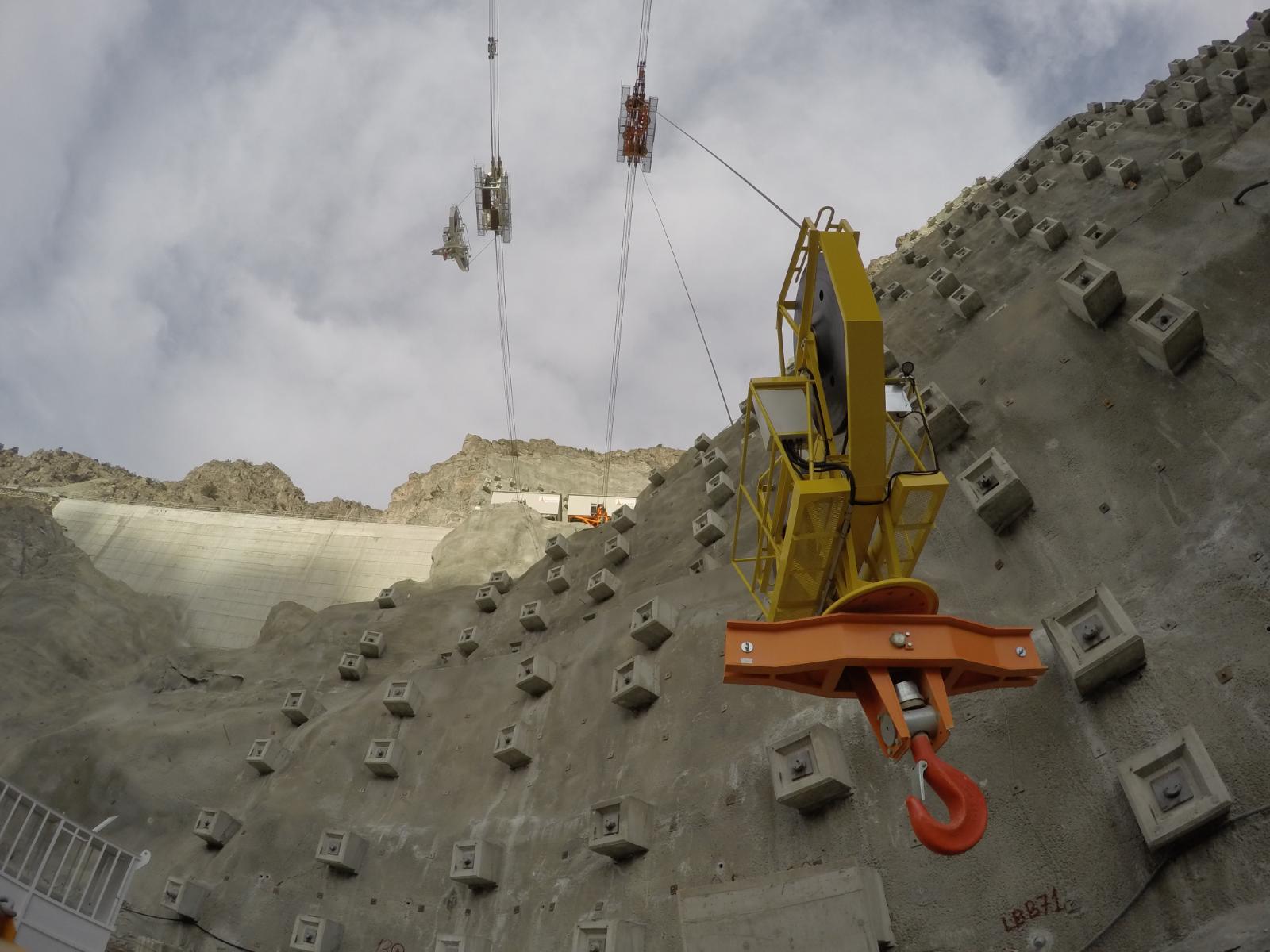
Three parallel 28 ton cablecranes used to move construction equipment and pour the 3,000,000 cubic metres of concrete needed to build the Yusufeli dam. The performance and reliability of Agudio machines were fundamental in building in just nine years a dam which, at 270 metres high, is one of the tallest in the world.

Discover more
Cerro del Aguila cablecrane, Peru

Cerro del Aguila cablecrane, Peru

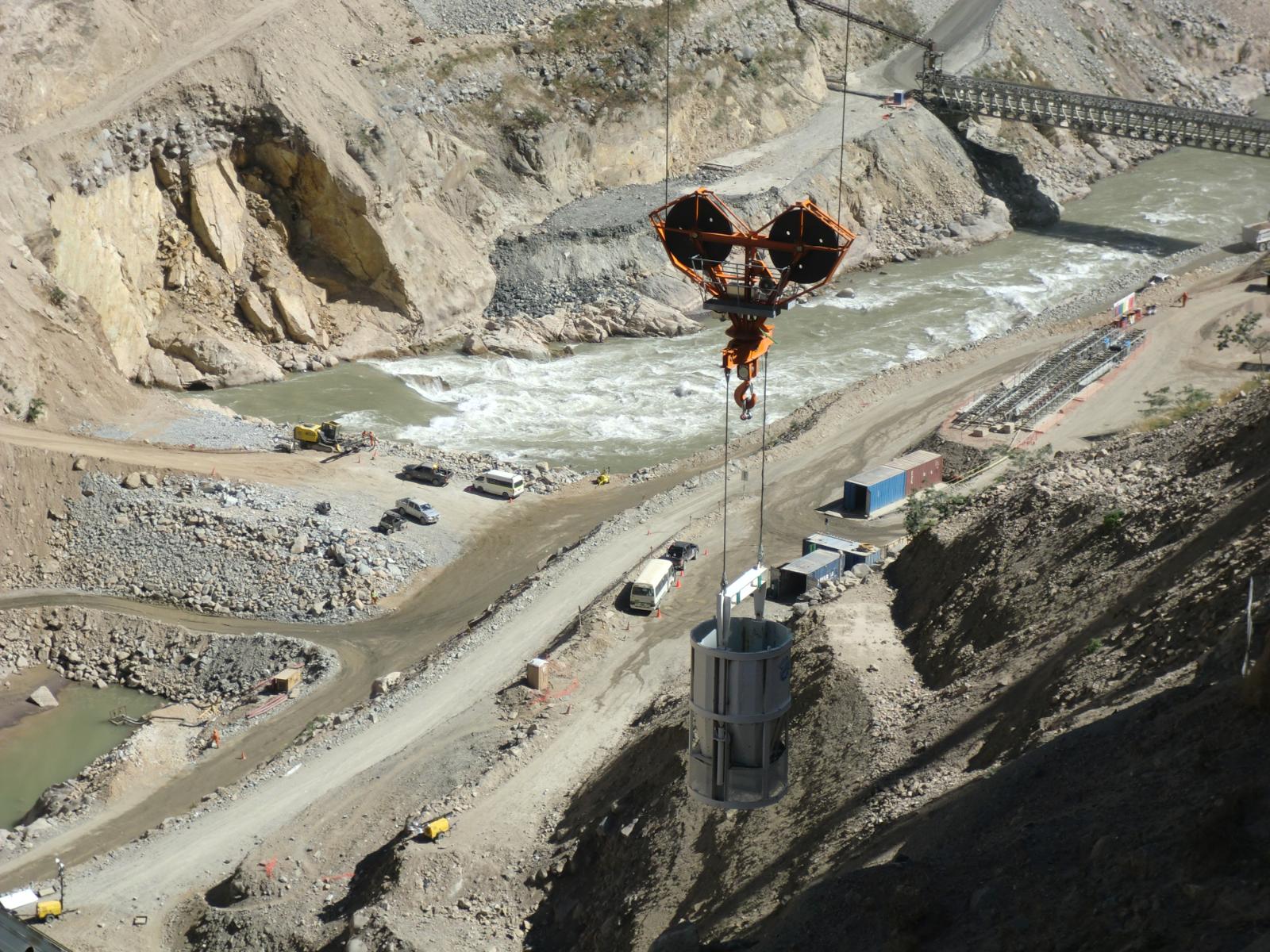
Radial cablecrane used to build the Cerro del Aguila dam in Peru, approximately 270 km from Lima. Characteristics of the construction site were the confined spaces and difficult access, and the Agudio cablecrane was the ideal solution for working efficiently from above.

Discover more
Foz Tua cablecranes, Portugal

Foz Tua cablecranes, Portugal

Two 28 ton radial cablecranes used to pour concrete and to lift and position construction equipment.

Discover more
Baixo Sabor cablecrane, Portugal

Baixo Sabor cablecrane, Portugal

Two parallel cablecranes used in the construction of the Baixo Sabor dam in Portugal. The two 28-tonne machines were essential for carrying out the 100,000 transport cycles required to pour the more than 800,000 m3 of concrete needed to build the dam.

Discover more
Gibe III cablecrane, Ethiopia

Gibe III cablecrane, Ethiopia

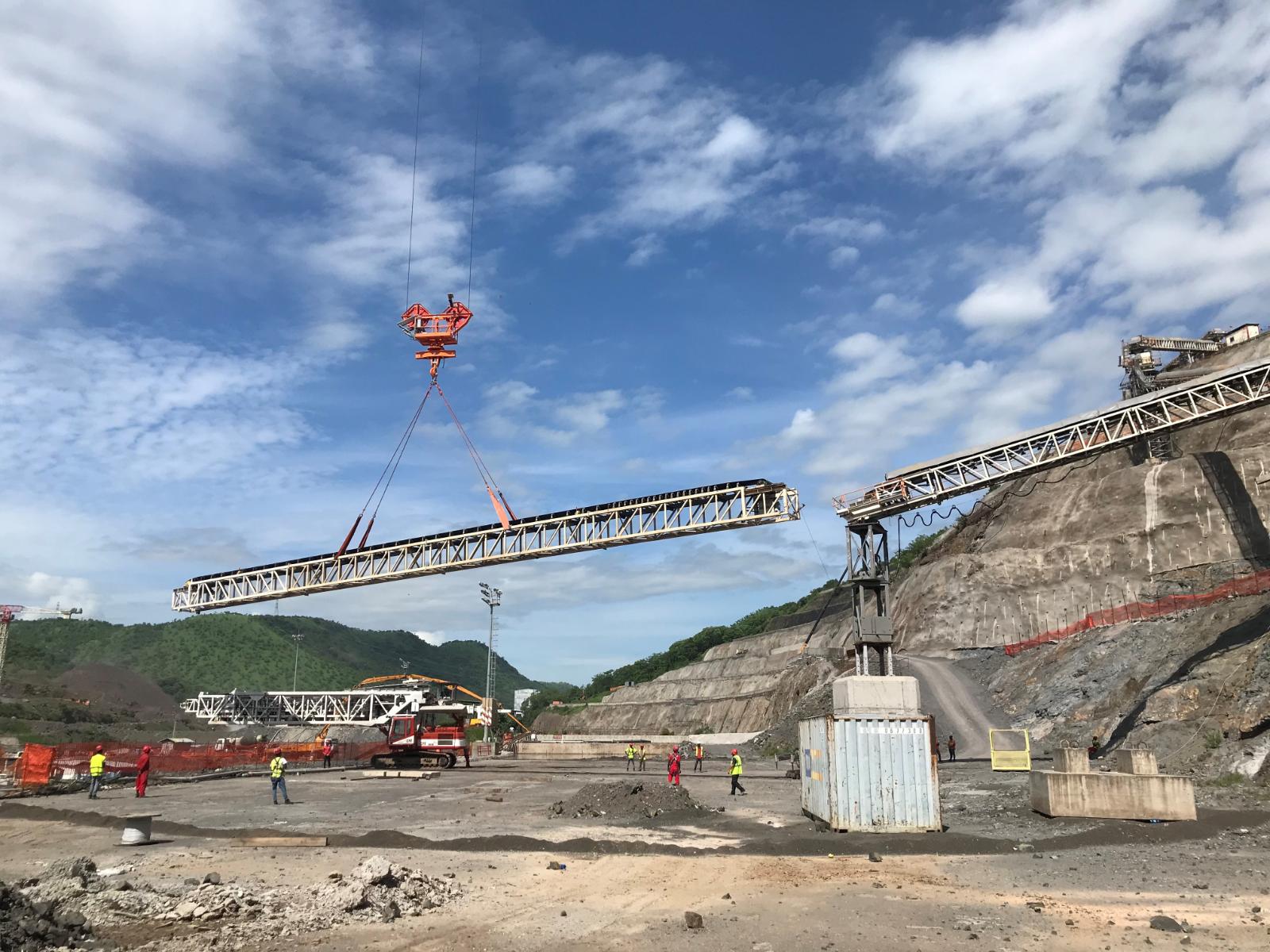
Radial cablecrane used in the construction of a RCC dam. The cablecrane has been identified as the best equipment to move the conveyor belts used to transport the RCC, significantly reducing construction time and cost. One of the key features of this cable crane is the 70-meter fixed tower, a challenge both in terms of design and construction.

Discover more
Hoover dam cablecranes, USA

Hoover dam cablecranes, USA

Design and construction of the traslation vehicles and slack carriers for the two oscillating cable cranes used in the construction of the Hoover Dam bypass viaduct on the Nevada-Arizona border. The cable cranes were used to move construction equipment and the prefabricated sections of the viaduct.

Discover more

Request commercial contact

Please rotate your device to portrait mode.